CSO, CRO or VP of Sales: at $1M to $10M ARR, the title matters less than whether the person builds.
A fractional CSO is a part-time Chief Sales Officer: a senior sales executive who works as your company's top sales leader for a set number of hours a month. A founder at $1M to $10M ARR rarely needs the C-suite title. What that founder needs is the work: a written playbook, clean pipeline stages, rep accountability and a plan to get out of closing. Hire the person who has built that at your size.
Key Takeaways
- A fractional CSO (Chief Sales Officer) is a senior sales executive who works part-time as the company's top sales leader, covering sales strategy, team structure, process and pipeline performance.
- A fractional CSO and a fractional VP of Sales own the same sales job. A fractional CRO usually owns marketing and customer success too. Firms often pick the title that matches the client's org chart.
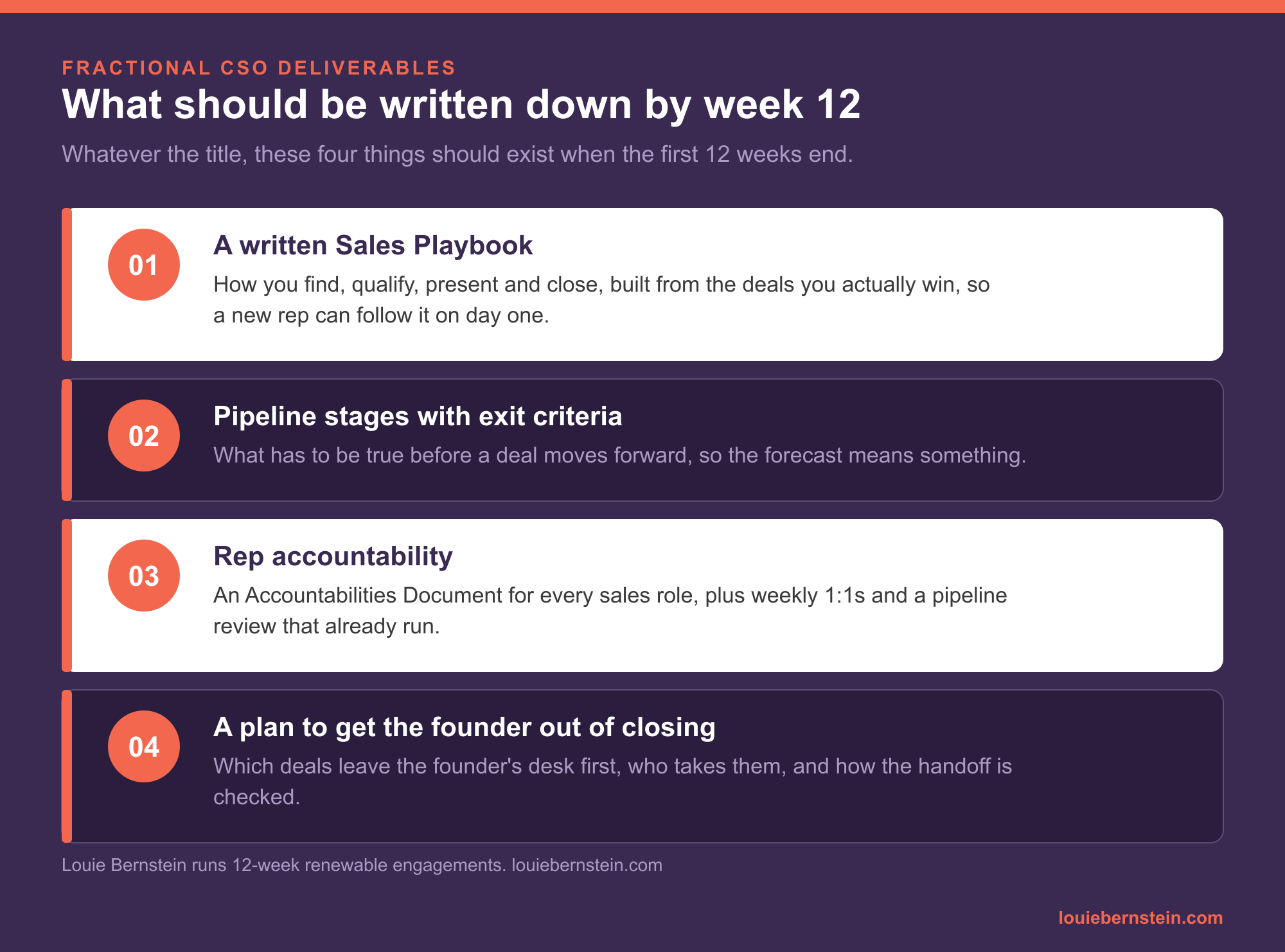
- A founder at $1M to $10M ARR doesn't need a CSO title. The founder needs a written playbook, pipeline stages with exit criteria, rep accountability and a plan to get out of closing.
- A fractional CSO costs about what other senior fractional sales leaders cost, generally $10K to $20K a month. Go Fractional's November 2026 guide puts a fractional CRO at about $16,600 a month.
- Before you hire a fractional CSO, ask three questions: Have you built a sales system at my revenue stage? What will be written down by week 12? How does the engagement end?
Search "fractional CSO" and you'll find firms whose leaders came up through big companies. Chief Outsiders says each of its CMOs and CSOs has led marketing or sales at a diverse set of large corporations, and it lists more than 120 of them.
That's a real strength. Big companies teach discipline, process and scale.
But a founder at $3M with two reps and no playbook has a different problem. Nobody is going to hand the new leader a sales ops team, a training department or a clean CRM. Somebody has to build those from nothing.
At your size, don't hire the title. Hire the person who has built a sales system from nothing at a company like yours.
What is a fractional CSO?
A fractional CSO, or fractional Chief Sales Officer, is a senior sales executive who works part-time as a company's top sales leader. The role covers sales strategy, team structure, sales process and pipeline performance. The company gets C-level sales experience for a set number of hours a week, without the cost and commitment of a full-time executive.
"Fractional" just means part-time and ongoing. A fractional CSO often works with two or three companies at once (half of the 213 fractional professionals in Go Fractional's 2026 survey did), attends the weekly meetings that matter, and owns real outcomes. That's different from a consultant who writes a report and leaves.
You'll also see "advisory CSO." An advisory CSO typically meets with the founder or the board a few times a month and gives guidance. A fractional CSO does the work: runs the pipeline review, coaches reps and writes the process down.
How is a fractional CSO different from a fractional VP of Sales or a fractional CRO?
A fractional CSO and a fractional VP of Sales do mostly the same job: they own sales. A fractional CRO usually owns the whole revenue number, which adds marketing and customer success. In practice, firms choose the title that fits the client's org chart, so ask what the person will own, not what the title says.
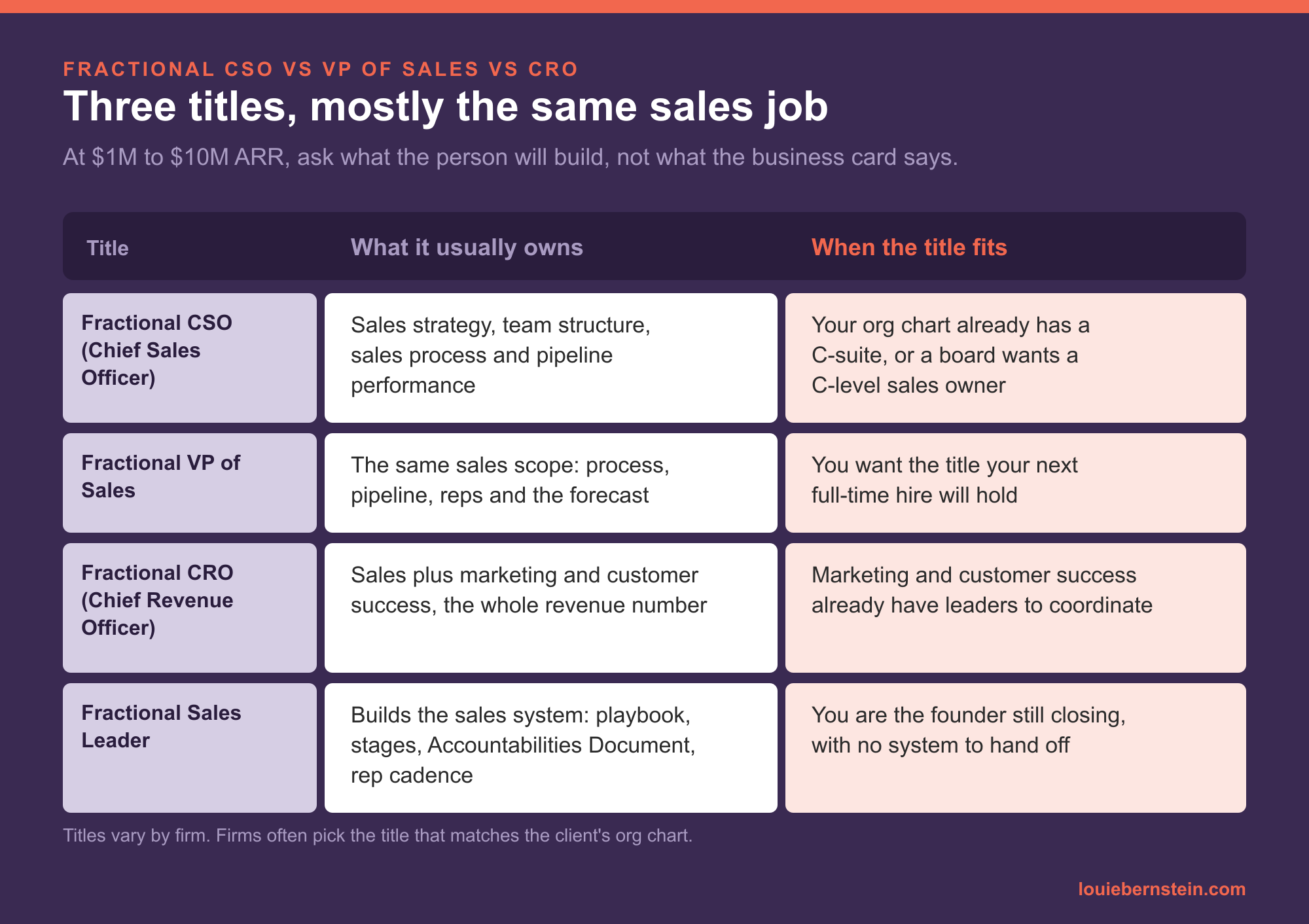
I've written the full side-by-side in Fractional Sales Leader vs Fractional VP of Sales vs Fractional CRO. If you're weighing the broadest title, read can a fractional CRO really do all the jobs first. One part-time person covering sales, marketing and customer success at the same time gets stretched thin fast.
Does a $1M to $10M founder need a fractional CSO?
A founder at $1M to $10M ARR doesn't need the CSO title. The founder needs the work behind it: a written sales playbook, pipeline stages with exit criteria, rep accountability, and a plan to get the founder out of closing. Whoever you hire, judge them by whether those four things exist and get used when the first 12 weeks end.
Titles matter at big companies because big companies have layers. A CSO sits above VPs, who sit above directors, who sit above managers. At a 12-person company, there are no layers. The sales leader is also the sales manager, the trainer, the ops person and sometimes the closer.
When the CSO title does make sense
- You have a board or investors who want a C-level owner of the sales number in the room.
- You already have a VP of Sales and need someone senior above that person for a period of time.
- Your buyers are large enterprises whose executives expect to meet their peer.
If none of those apply, the title is decoration. Spend your attention on the build.
Is big-company sales experience an advantage in a fractional CSO?
Big-company sales experience is an advantage only if the fractional CSO has also built a sales system from scratch. Running a 200-rep team with a full ops staff is a different job from building the first sales process at a 12-person company. Ask for proof of both: the discipline big companies teach, and the building small companies demand.
What 50 years in sales taught me about big companies and building from zero
My first computer sales job was at Digital Equipment Corporation in 1981. DEC had about 50,000 people. I learned a lot about selling and technology there. At a company that size, much of the system is built before you make your first call.
I also learned I didn't want to work for a big company. But I'd never taken a business course. So I went to EMC, then a small memory board company, as district manager for the Southeast. I carried my own little P&L. That's where I learned what it takes to run a business, not just sell for one.
Then, in 1986, I founded MindIQ. I ran it for 22 years, and it made the Inc. 500. Nobody handed me a playbook. Nobody built my CRM stages or wrote my reps' job descriptions. I did it, got some of it wrong, and fixed it.
Both experiences mattered. DEC taught me what good looks like. Building MindIQ taught me how to get there with no team, no process and no budget. A founder at $3M needs the second skill more than the first.
A big company teaches you what good looks like. Building from zero teaches you how to get there with nothing.
What does a fractional CSO cost?
A fractional CSO costs about the same as other senior fractional sales leaders, generally $10K to $20K a month depending on hours and scope. That's roughly half the cost of a full-time VP of Sales, who runs $250K to $400K a year. The title alone shouldn't move the price much, because the hours and the work are what you pay for.
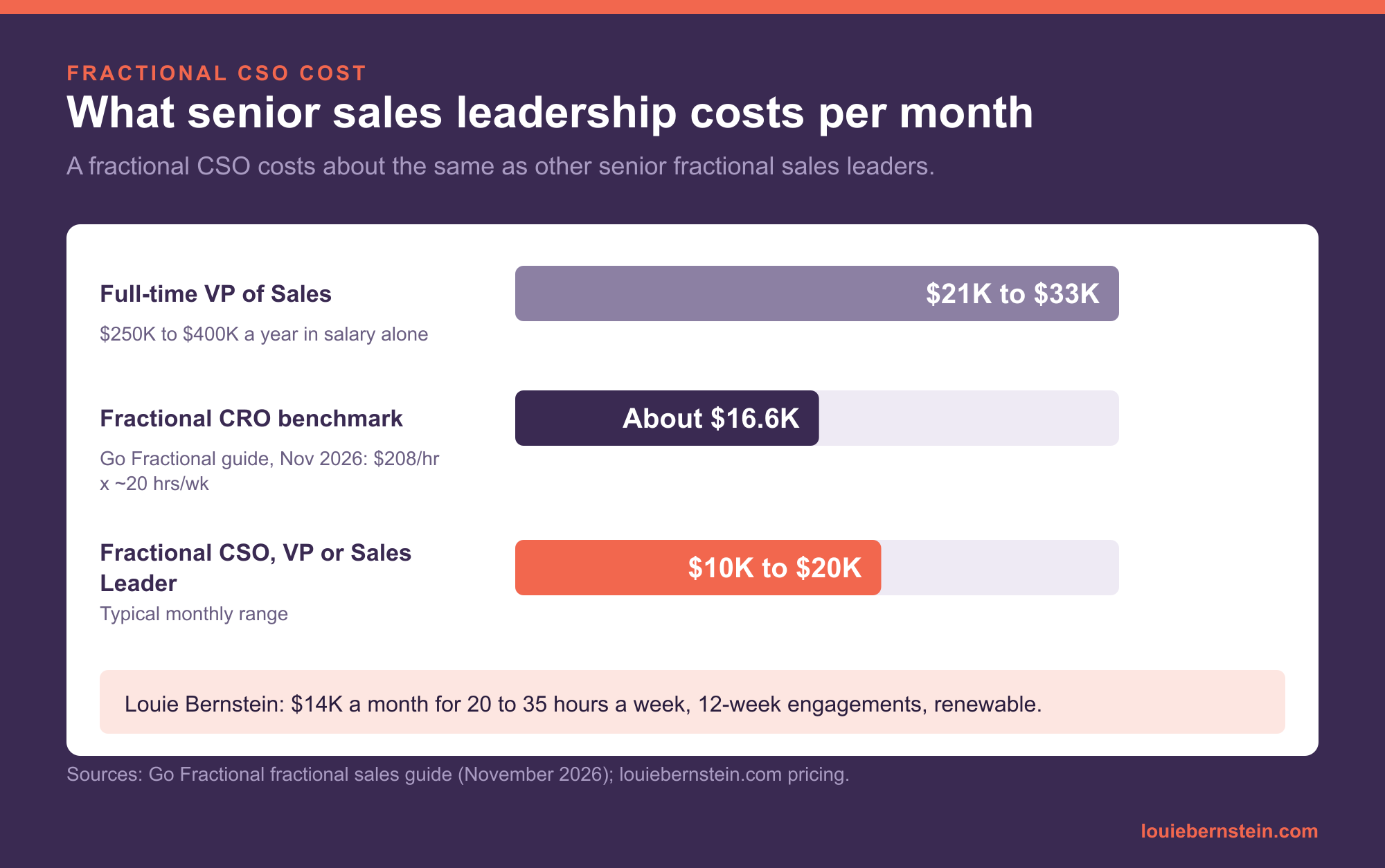
For a dated benchmark, Go Fractional's fractional sales guide, updated November 2026, puts a fractional CRO at $208 an hour for about 20 hours a week, or about $16,600 a month. I couldn't find a published benchmark for the CSO title itself, which tells you something: the market prices the hours and the seniority, not the letters. I break down the CRO numbers in fractional CRO pricing.
My own fee is $14K a month for 20 to 35 hours a week, in 12-week engagements, renewable. Most of my clients renew for 6 to 12 months total.
What should I ask before hiring a fractional CSO?
Before hiring a fractional CSO, ask three questions: Have you built a sales system at my revenue stage? What will be written down by week 12? How does the engagement end? The answers show whether the person builds or only advises, and whether you'll own anything when the engagement is over.
- Have you built a sales system at my revenue stage? Ask for a specific company, its size when they started, and what they built. Big-company experience alone doesn't answer this question.
- What will be written down by week 12? A good answer names documents: a playbook, stage definitions with exit criteria, Accountabilities Documents for each role. A vague answer about "strategy" is a warning sign.
- How does the engagement end? You want a handoff plan, either to a full-time leader, to a promoted rep, or to you running a system that works without you.
One more, if you're talking to a firm: who will actually do the weekly work? The person who sold you should be the person in your pipeline review.
Frequently Asked Questions
What does a fractional chief sales officer do in the first 90 days?
A fractional chief sales officer spends the first 90 days learning how deals actually close, then writing it down. That means interviewing the founder and reps, reviewing won and lost deals, setting pipeline stages with exit criteria, and starting weekly 1:1s and a pipeline review.
Is a fractional CSO the same as a sales consultant?
No. A sales consultant usually studies the problem and delivers recommendations. A fractional CSO works inside the company every week, leads the sales team and owns results. If nobody is running your pipeline review after the work is done, you hired a consultant.
Can a fractional CSO manage my sales reps directly?
Yes. Managing reps directly is usually the most valuable part of the job at $1M to $10M ARR. The fractional CSO runs 1:1s, reviews calls, holds reps to their Accountabilities Documents and coaches them on the playbook, so the founder stops being the sales manager.
How long should a fractional CSO engagement last?
Plan on at least one 12-week engagement to build the system, then renew while you prove it works. Most of my fractional clients renew for 6 to 12 months total. Shorter than 12 weeks rarely leaves time to build and test a playbook with real deals.
Should my fractional CSO eventually become full-time?
Usually not, and that's fine. The point of a fractional CSO is to build the system a full-time leader can inherit, or one your team can run. When the playbook works and the forecast holds, hire your full-time VP of Sales into a working system.
Skip the title. Get the system built.
If you're a B2B founder at $1M to $10M ARR and you're comparing fractional CSOs, VPs and CROs, let's talk about what your sales system actually needs and who can build it at your size. Learn about Fractional Sales Leadership at LouieBernstein.com.
Schedule a 30-Minute CallAbout the Author
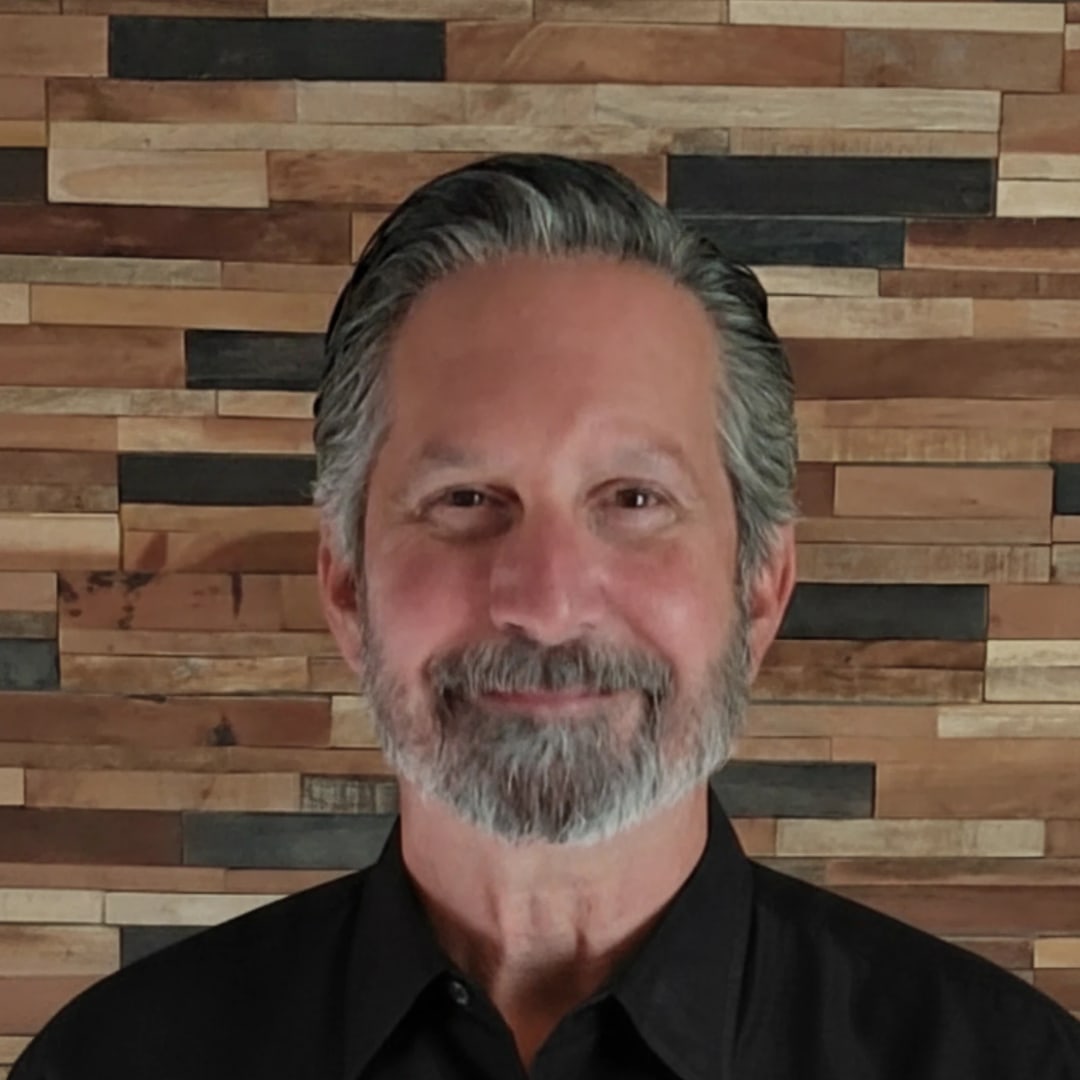
Louie Bernstein Fractional Sales Leadership
Louie Bernstein is a Fractional Sales Leader with 50 years of sales experience and has worked as a Fractional Sales Leader since 2017. He built and ran MindIQ for 22 years. He helps B2B founders at $1M to $10M ARR build repeatable sales systems so selling doesn't depend on the founder.