Stop Managing Sales, Start Leading Growth
Founders and CEOs want a steady, scalable sales engine, and your best reps want a system that helps them win. But when sales is still founder-led without a sales playbook, priorities shift daily, meetings turn into firefighting, morale drops, and top talent walks. This video shows how to replace chaos with clarity using a simple operating system: a written Sales Playbook, clear pipeline stages, weekly pipeline reviews, and KPIs that define success for AEs and BDRs. You’ll learn why “salespeople don’t quit pay, they quit chaos,” how to stabilize revenue by standardizing process, and when to pull sales off your plate so the team gets direction and momentum. We cover hiring sequence (hire two reps first), onboarding checklists, daily training and role play, and how to stop turnover by documenting the work. If you lead a small business and still run sales, this is for you. Keywords: founder-led sales, fractional sales leadership, Sales Playbook, sales process, pipeline stages, KPIs, onboarding, daily training, pipeline review, retain top sales talent, reduce turnover, small business sales management, stabilize revenue, clarity over chaos. Watch to see how clarity pays and why the future of your business depends on process over personality. Key Takeaways: 1. The Core Problem: Chaos Kills Sales "Salespeople don't quit pay, they quit chaos" Without documented processes, founder-led sales creates daily firefighting instead of strategic growth Top talent walks when there's no clear system to help them win. 2. The Solution: Build a Simple Operating System Written Sales Playbook (the foundation document) Clear pipeline stages (defined progression) Weekly pipeline reviews (accountability rhythm) KPIs for AEs and BDRs (measurable success metrics) 3. The Right Hiring Sequence Hire TWO reps first (not one) Build onboarding checklists before hiring Implement daily training and role play Document everything to stop turnover 4. Why Process Over Personality Stabilizes revenue by standardizing what works Allows founders to step back from sales execution Gives the team direction and momentum Creates clarity that pays dividends 5. The Ultimate Goal Pull sales off your plate as founder Let your team operate with documented systems Scale revenue without being the bottleneck Focus on CEO duties while sales grows Frequently Asked Questions (FAQs) FAQ #1: How long does it take to build a complete Sales Playbook from scratch? The Short Answer: 2-4 weeks to get the foundation in place. But here's the truth most won't tell you: your Sales Playbook is never "done." The Reality: If you're a founder who's been selling for 6+ months, you already have 75% of what you need in your head. The hard part isn't creating it—it's documenting what you already know. Week 1: Document your current sales process Who your ideal customers are (ICP) Your average sales cycle length Decision makers and buying process Objections you hear repeatedly Week 2: Build your prospecting system Call scripts (what actually works when you say it) Email templates and follow-up sequences LinkedIn messaging approaches Qualification questions Week 3: Create your closing framework Proposal templates Pricing structures and negotiation boundaries Contract process Common roadblocks and how to overcome them Week 4: Add training materials Product knowledge documentation Competitive intelligence Role-play scenarios Success metrics and KPIs The Key: Start with too much detail, then cut. It's easier to remove than to fill gaps later when your new hire is floundering. After Launch: Update it monthly based on what your team learns. A Sales Playbook is a living document, not a museum piece. Most founders never start because they think it needs to be perfect. It doesn't. It needs to be DONE and DOCUMENTED. FAQ #2: Why should I hire two reps instead of one, and how do I afford that? The Brutal Truth: Hiring one salesperson is a gamble. Hiring two is a strategy. Here's What Happens When You Hire One: They quit 3 months in → You're back to square one, doing all the selling They don't work out → You can't tell if it's them or your process They succeed → They have no peer support, no one to learn with You can't afford to lose them → They have all the leverage Here's What Happens When You Hire Two: One quits → The other keeps momentum going while you hire a replacement One struggles → You can see if it's the person or the system by comparing performance They train together → They role-play, share wins, solve problems as a team Healthy competition → They push each other without you having to micromanage Future sales manager → One will likely emerge as a leader "But Louie, I can't afford two salespeople!" Then you can't afford one either. Wait. The Math: Base salary for one rep: $60K-$80K Ramp time: 3-6 months before they're productive If they quit: You've spent $15K-$40K and got nothing Better Approach: Hire two at $50K-$60K base each (slightly lower than one expensive rep) They ramp together with mutual support Your risk is distributed Your upside is 2x The Reality Check: If you don't have 10-15 closed customers and more leads than you can handle, you're not ready to hire anyone. Use that time to save up for two hires. Founder Math: Two $60K salespeople = $120K in year 1 If each closes $300K in their first year (conservative), that's $600K in new revenue Your ROI: 5x your investment Hire two. If you can't, wait until you can. FAQ #3: What are the minimum pipeline stages I need, and how do I define them for my specific business? The Core Rule: A prospect moves to the next stage based on THEIR ACTION, not your hope. The Minimum (4-5 Stages): 1. LEAD (Identified) Action: They fit your ICP and you have contact info NOT: "I think they might be interested" 2. QUALIFIED (Connected & Engaged) Action: They responded to outreach OR agreed to a meeting NOT: "I left them a voicemail" 3. MEETING HELD (Discovery Complete) Action: They attended a demo/discovery call AND confirmed they have budget/timeline/authority NOT: "We talked and they seemed interested" 4. PROPOSAL SENT (Active Decision Process) Action: They received your proposal AND are in active evaluation with a decision date NOT: "I sent them a quote 3 weeks ago" 5. CLOSED WON / CLOSED LOST Action: Contract signed OR they explicitly said no NOT: "They ghosted me so I guess it's dead" How to Customize for YOUR Business: Ask yourself these questions: What's the ONE thing a prospect must DO (not say) to prove they're moving forward? What's the typical sequence of events from first contact to signed contract? Where do deals typically get stuck or die? Example: SaaS Business Identified → Demo Scheduled → Demo Completed → Trial Started → Proposal Sent → Closed Won Example: Consulting Business Identified → Discovery Call Booked → Discovery Completed → Proposal Presented → Negotiation → Closed Won Example: Enterprise Sales (longer cycle) Identified → Qualified → Discovery → Technical Demo → Proof of Concept → Business Case → Legal Review → Closed Won The Test: If your salesperson says "They're in the Proposal stage" you should be able to ask: "What action did they take to earn that stage?" If the answer is "Well, I sent them a proposal" → WRONG STAGE If the answer is "They confirmed they're comparing vendors and will decide by March 15th" → RIGHT STAGE Start Simple: If you're unsure, start with 4 stages and add complexity later. It's better to have clear definitions for 4 stages than vague definitions for 8. Your pipeline stages should reflect YOUR customer's buying journey, not some template you found online. FAQ #4: How do I run an effective weekly pipeline review without it turning into another firefighting meeting? The Problem: Most pipeline reviews become status updates where everyone reports what they already know, or they turn into panic sessions about deals that are dying. The Solution: Structure kills chaos. Here's the 15-20 minute format that works: BEFORE THE MEETING (5 minutes prep time): Each rep reviews their pipeline in the CRM They identify: 1 deal that needs help + 1 deal moving forward They come ready to ask ONE specific question (not give a novel) THE MEETING (15-20 minutes total): Part 1: Quick Wins (3-5 minutes) Any deals that closed since last week? Celebrate for 30 seconds, move on Builds momentum, recognizes effort Part 2: Pipeline Health Check (5-7 minutes) Go through each stage of the pipeline Question: "What ACTION did the prospect take to be in this stage?" If the answer is vague or based on hope → Move it back a stage This prevents "pipeline stuffing" and wishful thinking Part 3: Focus on Stuck Deals (5-8 minutes) Each rep brings ONE deal that's stuck or needs input Group problem-solves for 2-3 minutes max You provide coaching, not hand-holding Action item assigned, move on Part 4: Forward Look (1-2 minutes) What deals are closing this week? No surprises = no panic If a deal is going to close, you should already know about it WHAT THIS IS NOT: ❌ A place to hear every detail about every conversation ❌ An excuse for reps to avoid doing the work ❌ A therapy session about why deals are hard WHAT THIS IS: ✅ A forcing function to keep pipeline data accurate ✅ A coaching opportunity to teach in the moment ✅ A way to spot patterns (same objection from 3 prospects = we need to address it) The Secret Weapon: After the meeting, update the CRM immediately based on what you learned. If you're relying on reps to update it later, it won't happen. How to Prevent Firefighting: No deal should ever be a surprise in these meetings If a rep says "This deal that was supposed to close this week just fell apart" → That's a coaching problem The pipeline review should reveal problems BEFORE they become fires The 1:1 Rule: Pipeline reviews are NOT the place for 1:1 coaching conversations. Those happen separately (monthly or quarterly) and focus on skills, growth, and career development. Keep it tight. Keep it focused. 15-20 minutes, every week, same time. FAQ #5: What's the difference between a Sales Playbook and just having our process documented in the CRM? The Blunt Answer: Your CRM is a database. Your Sales Playbook is your instruction manual. Here's the Difference: YOUR CRM: Tracks WHAT is happening (deal stages, contact info, activity history) Shows WHERE deals are in the pipeline Records WHO is responsible for each account Measures WHEN things happened YOUR SALES PLAYBOOK: Teaches HOW to move deals forward Explains WHY certain approaches work Provides WHAT TO SAY in specific situations Defines WHO the ideal customer is and how to find more Think of it This Way: Your CRM is your scoreboard → It tells you if you're winning or losing Your Sales Playbook is your game plan → It tells you HOW to win What Belongs in Your CRM: Contact records Deal stages and values Activity logs (calls, emails, meetings) Notes from conversations Task reminders and follow-ups What Belongs in Your Sales Playbook: Ideal Customer Profile (ICP) definition Call scripts and email templates Discovery questions to ask Objection handling frameworks Competitive intelligence Pricing guidelines and discount authority Product knowledge and positioning Onboarding checklist for new hires KPIs and success metrics Sample proposals and contracts The Real World Example: Without a Sales Playbook: New hire logs into CRM Sees a list of contacts Has no idea what to say when they call Makes it up as they go Gets inconsistent results With a Sales Playbook: New hire reads the prospecting section Uses the proven call script Asks the discovery questions that uncover pain Handles objections using your framework Logs everything in the CRM Gets results in week 1 instead of month 3 The Integration: Your Sales Playbook should REFERENCE your CRM: "Log all discovery notes in the Discovery Notes field" "Move to Proposal stage only after completing the Business Case template" "Set a follow-up task for 2 business days after sending proposal" But your CRM should never BE your Playbook: CRM fields change CRM access requires login CRM is terrible for training and reference CRM doesn't explain the "why" behind the process Bottom Line: Your CRM tells you what's happening right now. Your Sales Playbook tells your team how to make good things happen next. One without the other? You're leaving money on the table.
Watch on YouTubeMore Videos
How much time do I need to spend with a Fractional Sales Leader?

Building a sales system that works without you

Why You’re Still Hiring the Wrong Salespeople

Why Your Sales Team Stops Listening to You

Build A Sales System That Actually Works

Are you wasting $50k you can't afford?

How to Spot a "Fake" Fractional Sales Leader

The 3 Documents You Need Before Hiring a Sales Rep

Why You’re Still Closing Every Deal (and Killing Your Growth)

The Real Reason Your Top Sales Rep Is Interviewing Elsewhere

Saving 12 Months of Lost Revenue in One Interview

Trading Your Corporate Title for Fractional Freedom
Step 17. Having Meaningful One-on-Ones (1:1) Meetings

Will a recession put you out of business?

How to Scale Past Founder-Led Sales

Why Your Company Stops Growing at $1M (The Founder Trap)
Stop Wasting Money on Sales: The "Blank Stare" Fix for Founders
Stop Hiring Salespeople on "Gut Feeling" (The Scorecard Method)

Give everything and get more back!

Fractional vs Full-Time Sales VP Explained

The 4 things every real sales deal must have

Are you the best salesperson in the company?
Pipeline Honesty

Your Sales Playbook Is NOT Just for Sales

Stop Closing Every Deal Yourself

Step 6. Setting SMART sales goals

The Most Important Document for Your Sales Team
Step 15. The Weekly Sales Meeting and KPIs

Your sales team can't close. Fix this.
Step 8. Sales Prospecting: Cold Calls, Voicemails, Emails

CEO or Sales Rep?

Hiring a Fractional Sales Leader in the US

Don’t Hire a VP Sales Yet
Step 13. Creating Prospect Stages For An Accurate Pipeline and Easier Review

How Companies Kill Good Products - Without knowing it

Stop Being Your Company's Best Closer

Stop hiring "visitor" sales leaders

Stop Hiring Bad Sales Reps (Ask This Instead)

Pressure is your friend
Step 16. An Effective Pipeline Review

Stop Selling By Accident, Start Scaling

Don’t Hire A Fractional Sales Freelancer

Building a great sales team from scratch

Ask This Before Hiring A Fractional Sales Leader

Stop Focusing On Your Customers Now

Getting Business on LinkedIn

Why 90 % of Reps Need Weekly Coaching

The Question That Ends Most Sales Interviews

Quit your job and start a business? 1 question.
Free Yourself From Sales Management

Step 14. Sales Training and Role Playing

The System Always Comes Before The Hire

2 Steps to hiring great salespeople

Don't Quit Yet — Reality Check Guide

4 Steps to Be a Leader People Admire

Are you burned out and don't even know it?

You don't want this advice.

Problems don't fix themselves Hunt them down.

Don't Start A Business Without This

2 Things That Bring Success
Founders: When to Let Go of Sales

Why your follow ups are killing your sales

Stop Running a Business on Empty

The 3-Gate Test: Should You Quit Your Job or Business?

How Founders Reclaim 15 Hours Weekly

How to make your businesses obsolete

Building The System First Before Building The Team

The Secret Email Step That Gets Replies

74 years of sales lessons in 60 seconds

30 Minutes That Saved Me From Burnout

Ignoring this became my worst nightmare

Just make friends to make sales, now!
The One Step That Speeds Up Closing
Founders, Fire Yourself

How to Handle a "Level 7" Crisis in Your Business

Just show up!

Why Prospects Go Silent
Step 11. The Simple Close Plan That Works

The $250,000 Hiring Mistake
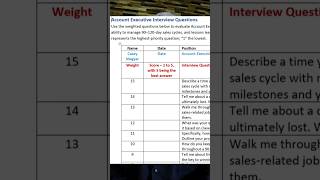
Big Hiring Mistake

Step 1. Putting Together Your Sales Playbook

Most Advice Is Useless. Here’s Why

Deals Die Here

The Trap of Founder Led Sales (And How to Exit It)
Why Fractional Sales Leadership Could Be Your Next Big Career Move
Build a Sales System That Runs Without You

The Deal Isn’t Closed Until Cash Clears

Step 2. Defining Your Ideal Customer Profile (ICP)

What founder burnout looks like

Don't Hire a Sales VP yet - Do This First
Step 9. Handling Sales Objections
Step 3. Hiring Your First Salespeople - The right way

Is a Fractional Sales Leader right for your business?

Fractional Sales Leader vs Sales VP

Hey Team - I've got your back

Without Resilience You're Doomed
How A Founder Lost 250k In Weeks

My 1st Sales Hire Mistake

Hiring a Fractional Sales Leader? ASK THESE 3 THINGS!

Stop Selling, Now!

Here's what a Fractional Sales Leader does
You don't need a full-time Sales VP

Why Your Sales Growth Has Stalled
Give Your Sales Team This One Document

Step 10. How To Deliver A Demo Or Presentation

My Simple Fix for Sales & Marketing Alignment

Fire Yourself From Sales

Build This Before Hiring Salespeople

Get New Sales Reps Productive In 2 Weeks
Why Your Top Sales Reps Quit

How One Sales Hire Failed Fast

Why Your Sales Reps Are Failing

A Wake Up Call That Saved Me

The Best Question For Hiring Salespeople

At 73 I'm Still Learning Sales

Don't Hire A Salesperson Until You Do This

Circle Of Success For Founders

Hiring Salespeople? Ask These 3 Questions

Don't Die With Business Regrets

It's A Terrible Time To Be In Sales

How Reality Kills Founder-Led Growth
The One Page Sales Team Fix

The $200k Sales Hire Mistake

Founders' Sales Advice That Actually Works

How To Really Build Grit As A Founder